
Hospitality and AI: what EquipHotel 2026 reveals about team transformation
- By Patrick Hoffstetter
- 6 min read
Contents
Share
In hospitality, 79% of professionals already use generative artificial intelligence: the real work now lies within teams. At EquipHotel 2026, three issues dominated the conversations: making AI a matter of learning, developing talent from within, and leading plural hospitality models. Connection Leadership, a transformation consulting firm that has worked alongside hospitality players since its creation, draws three questions from it that are useful to any executive committee.
Key takeaways
79 %
of hoteliers use generative AI (Food Hotel Tech)
80,000
professionals from 133 countries at EquipHotel 2026
3
questions to drive adoption after the trade show
Three issues dominated the show: AI as a matter of learning, talent developed from within, and plural hospitality models.
01
What the show told us
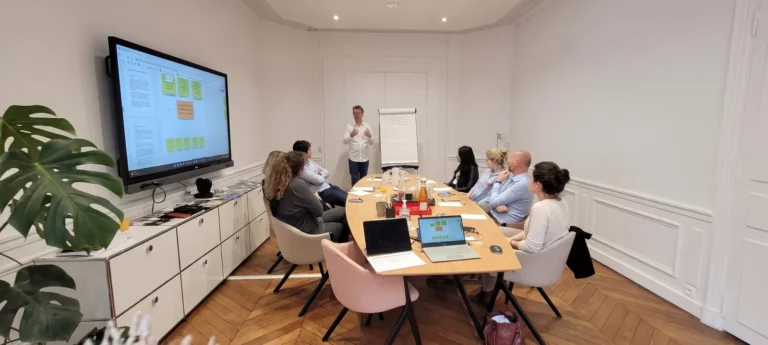
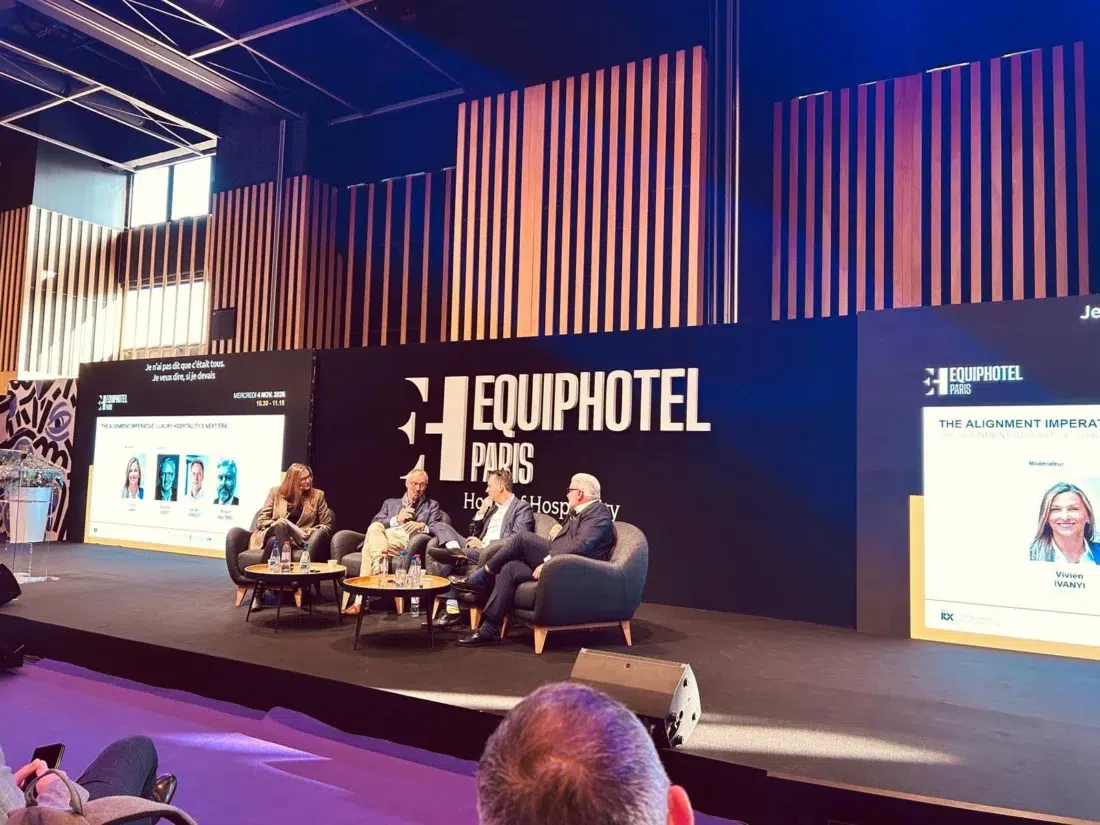
From 2 to 5 November, Paris Expo Porte de Versailles hosted EquipHotel 2026, under the banner of “plural hospitality”. The organizers announced more than 1,200 exhibitors and 80,000 professionals from 133 countries. Alexandre Cornu, our head of business development, and Lori, a Connection Leadership consultant, were there on the show floor.
“Misalignment remains all too common. The key lies in the structural agreement. It plays out far more in processes than in fees, and in a shared understanding of the brand’s and the owner’s objectives.”
Alexandre Cornu, Head of Business Development
The theme says something true about our times. Welcoming guests now takes a thousand forms: the palace and the hybrid address, dining and wellness, the stay and the experience. This plurality is a wealth for travelers. For those who lead, it calls for thinking about the organization differently: holding together several promises, several rhythms, several professions, around a culture vibrant enough for each team to interpret it with precision.
02
A long-standing partnership with hospitality
Connection Leadership has worked with hospitality players since its creation: recovery strategies after the health crisis, growth strategies, then artificial intelligence strategies. We have also worked on more intimate aspects of life in these houses: well-being, engagement, training.
Hotel group · Luxury and lifestyle
Aligning strategy, organization and leadership
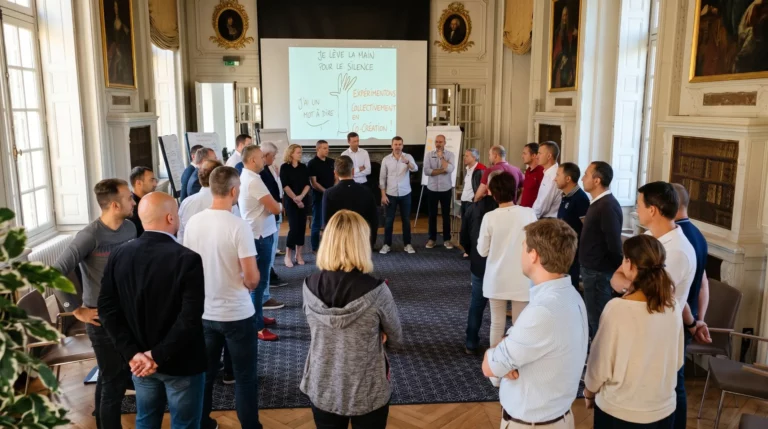
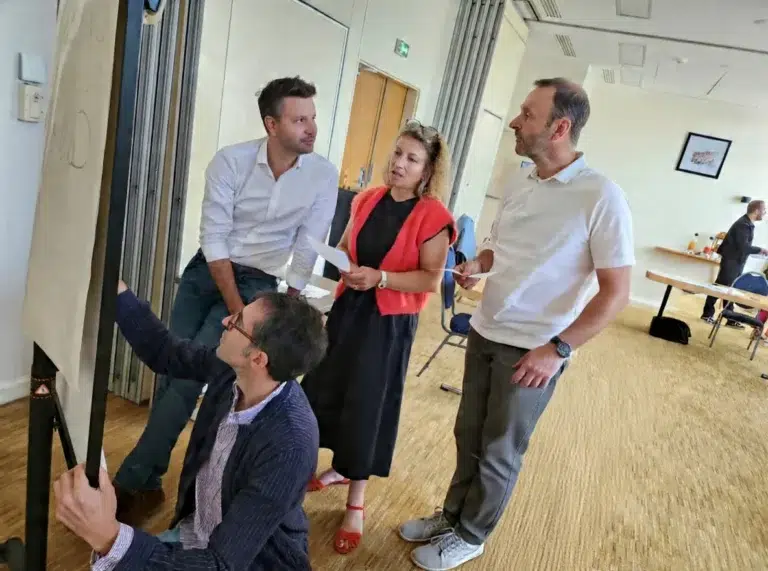
With the international sales leadership of a luxury and lifestyle hotel group, we worked on aligning strategy, organization and leadership practices. After an interview-based diagnostic, two days of workshops enabled the teams to agree on four shared priorities and build the related action plans. The work continued with the formalization of a growth platform and recommendations on organization, responsibilities and governance.
4 priorities
shared, agreed in two days of workshops
This journey taught us something essential: in this sector, strategy and attention are one and the same. A growth plan comes to life in a gesture of welcome, a technology project in a team’s trust. It is through this lens that we read this edition.
03
AI in hospitality, a matter of learning
Artificial intelligence is now established. According to the Food Hotel Tech study, 79% of hoteliers use generative AI, and the need for skills is the main barrier to its deployment. The tool arrived before the practice, as is often the case in transformations. The work of the coming years therefore lies within teams, with frontline managers as the first teachers.
The Mews survey, conducted in five countries, adds a valuable nuance. French hoteliers are more reserved than their counterparts about the concrete benefits of AI for their teams, and more attached to the relationship with the guest. I read in this a high standard: in France, hospitality remains a profession of presence. The fruitful question for an executive committee then becomes one of time. What time does the machine give back to teams, and what will that time be devoted to?
Hospitality schools are now working to balance automation and the human touch, as Hospitality ON points out. Every hotel management team makes this trade-off daily, often silently. Naming it with the teams, saying what is automated, what is protected and why, is an act of leadership.
04
Talent: the surest answer comes from within
The talent question is widening. Hospitality ON observes that recruitment pressures now extend to qualified profiles and management, just as the sector moves upmarket. The surest answer comes from within: spotting early, training, entrusting responsibilities a little before people feel ready. The houses that retain their people are those where the path to grow is clearly visible.
Béatrice Gravier, the show’s director, sees the ability to slow down as today’s true privilege. The idea applies to guests, and just as much to those who welcome them. The quality of attention offered to a guest reflects the attention the organization gives its own people.
On the Main Stage, La Fabrique du Tourisme brought together funders, entrepreneurs and operators around “positive hospitality”. I would gladly invite teams to that table. Tomorrow’s hospitality takes shape in how a new recruit is onboarded, how a briefing is run, how a mistake is welcomed. A culture of hospitality is lived first among colleagues.
05
Leading in the plural
A group that brings together several hospitality models learns to lead in the plural. The economics of a hybrid address and those of a luxury establishment follow distinct logics, and a mature executive committee knows how to welcome these disagreements as a resource. Alignment is patient work, taken up again at every stage of growth.
That an entire industry still travels to meet in person, at a time when everything can be ordered remotely, is a lesson in itself. In these professions, trust is built in person.
06
After the show: the three questions of adoption
You come back from a major trade show with ideas, contacts, sometimes orders. The real work begins afterwards: driving adoption. A new piece of equipment or a new tool shifts habits, roles and professional pride. Three questions then light the way.
01
Who gives something up in this change?
A mastered task, recognized know-how, a place in the team. Naming what is lost makes it possible to build what is gained.
02
Who needs to learn what?
Every function, from front desk to management, has its own learning to do. A training plan is built from these precise needs.
03
Who carries the topic day to day?
An adopted change always has a face in the establishment: a frontline manager, a referent, a pilot team.
These three questions open the first phase of The Catalyst Experience, Connection Leadership’s approach: reveal the system, before setting it in motion and anchoring the transformation.
Reveal the system
What the change shifts: what people give up, what they learn, who carries it day to day.
Set in motion
Shared priorities and clear responsibilities within the executive committee.
Anchor the transformation
In management practices and team skills.
Our consultants have led organizations themselves (general management, finance, HR, business units): they know these trade-offs from the inside.
This is where, between vision and action, Connection Leadership has stood alongside hospitality players since its beginnings. At Connection Leadership, we create the spaces for dialogue and alignment where a vision becomes shared priorities, priorities become commitments, and commitments become results. To discuss it, talk with Alexandre Cornu.
And in your organization, which change deserves to be adopted first?
After the show
Three steps from intention to action plan
Step 1
An initial conversation to define your needs
Step 2
A diagnostic
Step 3
An action plan shared with leadership
Human and business alignment that unlocks business results.
Connection Leadership
07
Frequently asked questions
How is AI transforming the hotel profession?
Artificial intelligence takes over part of the administrative and preparation tasks, and 79% of hoteliers already use generative AI (Food Hotel Tech study). It frees up time: value shifts toward the quality of presence with guests, which remains at the heart of French hospitality.
What is the main barrier to AI in hospitality?
The need for skills is the main barrier to AI deployment in hospitality, according to the Food Hotel Tech study. Success depends on training teams, with frontline managers as the first relays.
How can hotels retain talent?
The establishments that retain talent make the path to grow visible: spotting potential early, training, and entrusting responsibilities a little before people feel ready. The quality of attention given to employees is reflected in the attention offered to guests.
What does Connection Leadership do for hospitality players?
Connection Leadership is a transformation consulting firm that has worked with hospitality players since its creation, on recovery, growth and artificial intelligence strategies, as well as team engagement and training. Its approach, The Catalyst Experience, connects strategy, organization and human dynamics.
Sources
1. Journal des Palaces — EquipHotel 2026: plural hospitality at the heart of innovation (in French)
2. Journal des Palaces — Food Hotel Tech study: AI is settling in, training becomes essential (in French)
3. Tendance Hôtellerie — Mews study: hoteliers’ expectations of AI (in French)
4. Hospitality ON — Hotel recruitment and training in the age of artificial intelligence (in French)
5. Hospitality ON — The triple challenge facing hospitality: new generations and AI (in French)
6. Journal des Palaces — Interview with Béatrice Gravier, director of EquipHotel
7. Hospitality ON — La Fabrique du Tourisme puts positive hospitality on the agenda (in French)

Patrick Hoffstetter
Co-founder of Connection Leadership, he spent decades at the highest levels of corporate responsibility leading change, where strategy is decided and results are measured.
Your inflection point is the moment we’re built for.
The Catalyst Experience is systemic transformation that combines business precision and human potential to turn ambition into results.